Gabriel Jesus landed in Barcelona on Monday afternoon with his wife, his daughter and his son, a pile of suitcases and the grin of a man who has been waiting ten years for the phone to ring. “I’m very happy. Hopefully we win many titles,” the Brazilian told reporters at El Prat’s private-flights terminal. Asked about the knee that cost him eleven months of his career, he did not hedge: “The knee is perfect and I want to score lots of goals.”
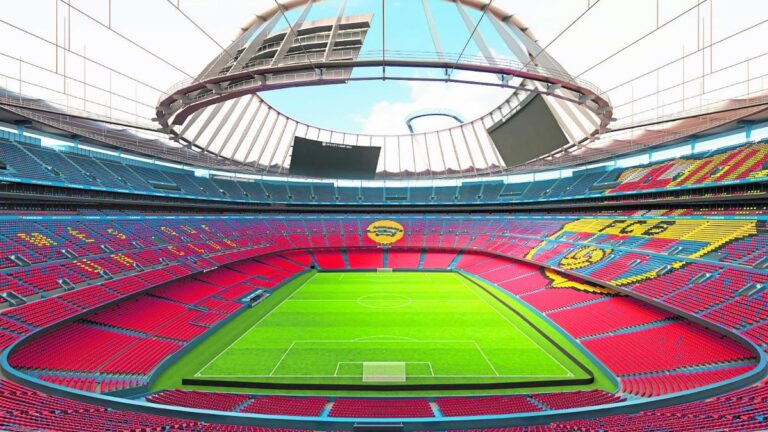
By the time the sun went down he had completed a medical, watched Barça beat Rayo Vallecano 5-2 from the front row of the directors’ box at the Spotify Camp Nou, and become — pending Tuesday’s official announcement — the sixth first-team signing of a summer that has quietly reshaped Hansi Flick’s squad. All of it for a fee that would not buy a squad player at most of his former employers.
The Gabriel Jesus transfer: fee, contract and timeline
The deal was broken by Mundo Deportivo‘s Fernando Polo on Sunday afternoon, and it moved at the speed only deadline week allows. Barça will pay Arsenal around €10 million, with a further €5m in performance-related add-ons. Jesus signs a two-year contract to 2028 with an option for a third season. Arsenal, whose No. 9 role had been handed to Kai Havertz and Viktor Gyökeres, granted permission for the 29-year-old to travel for his medical before anything was formally signed.
The medical itself ran to several hours, split between the Hospital de Barcelona and the club’s Ciutat Esportiva in Sant Joan Despí. Only once it was done did Jesus head for the stadium, where he sat with his wife and daughter — his agent Giovanni Branchini alongside — and shook hands with Joan Laporta, Deco and Bojan Krkic. The plan is for him to sign in the president’s office on Tuesday and be presented to the media the same day, hours before the window shuts at midnight.
If Flick is satisfied with his condition, a debut could come as soon as Sunday at Mestalla against Valencia (16:15 CEST). That would be a remarkably quick turnaround for a player who has not started a competitive match in weeks.
Why Barça needed a No. 9 — and why it took until deadline day
This is the hole that has defined Barcelona’s summer. Robert Lewandowski left as a free agent and Ferran Torres was sold to PSG, stripping the squad of both its penalty-box finisher and its most reliable back-up option. Flick said out loud at the end of last season that he wanted a genuine centre-forward; Deco repeated it on 19 August after the Gamper.
The intended solution was Julián Álvarez. Atlético Madrid never budged, refusing to negotiate at any price, and by the final week of August the operation was dead for this window. As we reported when the Álvarez saga reached its most extreme phase, the Argentine’s own preference never wavered — and Mundo Deportivo is clear that the Jesus signing does not close that file. Barcelona have informed Álvarez they intend to return for him in a future window, per ESPN Argentina.
In the meantime, Raphinha and Anthony Gordon have taken turns as an improvised false nine, and the club had been openly weighing a January move for a striker. Jesus removes the need to wait. He is not the marquee arrival the Camp Nou was promised in June, but he is a Premier League champion available on a two-year deal for the price of a squad rotation option.
The knock-on: Livaković gets registered
There is a second, less glamorous benefit to a €10m signing. Because the outlay is so small, Barcelona’s salary-cap room survives it — and that clears the path for Dominik Livaković. The Croatian goalkeeper, who signed a four-year deal from Fenerbahçe last week, was left out of the Rayo squad because he had not yet been registered with La Liga.
Per SPORT, the club is now confident the paperwork will be completed before the window closes, making Livaković the back-up to Joan García ahead of the 36-year-old Wojciech Szczęsny. Flick described him on Sunday as a goalkeeper “of the present and thinking about the future”.
What Barcelona are actually getting
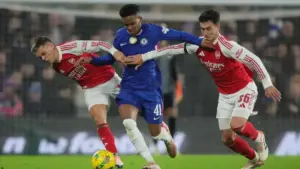
Strip away the fee and the numbers are serious: 95 goals in 236 appearances for Manchester City between 2016 and 2022, and 33 in 123 for Arsenal since. Five Premier League titles — four at City, one with Arsenal last season. Olympic gold at Rio 2016. Two Champions League finals, no winner’s medal.
Pep Guardiola, who coached him for six seasons, once offered the line that explains why Flick’s staff like him so much: “He’s the best defender-forward I’ve had to play in the three attacking positions. He can play five minutes and play the best five minutes of his life. He plays 90 minutes and he’ll give everything.”
Bojan Krkić senior, who scouted Jesus for Barcelona when he was still at City, told SPORT the profile is a near-perfect match for the current coach. “He’s a very good player technically. He guides with both legs, drives the ball well and reacts very quickly in tight spaces,” he said. “Gabriel Jesus is not a static centre-forward, he can appear in all areas of the area and also drop to the wing. And that is precisely what Hansi wants: that they constantly exchange positions. He is a team player and works a lot on the first press.”
That last point matters more than the goal tally. Flick’s front line is built on the counter-press, and the departure of Lewandowski removed a striker who was never going to lead it. Jesus, at 29, still will.
The knee — the one genuine risk
On 12 January 2025, Jesus limped off in tears at the Emirates during an Arsenal-Manchester United tie having just scored in six consecutive matches. The diagnosis was a ruptured anterior cruciate ligament in his left knee. He did not play again until 10 December, away in Bruges.
It was the third significant injury of his career. In January 2018 he sprained the collateral ligament in his right knee and missed 12 games without surgery; at the 2022 World Cup, against Cameroon, he damaged the meniscus and partially tore a collateral in the same knee and needed an operation, returning after three months.
Mundo Deportivo reports that Barcelona investigated his physical state thoroughly before committing and that every reference came back positive. The honest caveat is match rhythm rather than the ligament: with Havertz and Gyökeres ahead of him, Jesus barely featured in the decisive stretch of last season, and he was left out of Brazil’s 2026 World Cup squad as a result. He arrives fit but undercooked.
Ten years late
Barcelona could have had him for €32m in 2016. Under Josep Maria Bartomeu and sporting director Robert Fernández, the club tracked the teenager at Palmeiras and even moved to block the operation, but balked at that price for a 19-year-old and spent €30m on Paco Alcácer instead. Neymar, then a Barça player, lobbied Jesus during the Brazil squad’s Rio Olympics camp — telling him about the city, about the weather being like home. What settled it was a phone call from Guardiola, and City paid roughly the same fee Barcelona had refused.
The inheritance he now takes on is a complicated one. Brazilian centre-forwards at Barcelona run from Evaristo de Macedo, whose header knocked Real Madrid out of the 1960 European Cup, through Romário and Ronaldo — and then, more recently, to Keirrison, who never made a first-team appearance, and Vítor Roque, who lasted eight months.
For a player who spent the build-up to the 2014 World Cup painting the streets of São Paulo as a 16-year-old, raised by a mother who cleaned houses through the night, arriving as the cut-price alternative will not feel like an insult. Barcelona have taken a low-risk punt on a high-quality forward at the very end of a window they could not otherwise finish. If the knee holds, it may be the shrewdest thing Deco has done all summer.